


.svg)

.svg)


Information is general and not a substitute for medical advice. For urgent symptoms, call 9-1-1 or go to the nearest emergency department.

Pre-Launch Phase
Learn MoreJoin the Medea Santé Private Launch List
Learn More


Dermatology and aesthetic medicine neuromodulators dermal fillers skin conditions
An individualized assessment and conservative, clinically appropriate options focused on safety and skin health.
.avif)
Dermatological Conditions
Our consultations allow the assessment and management of many common skin conditions, including:
Inflammatory conditions:
- Eczema
- Psoriasis
- Rosacea
- Urticaria
- Seborrheic dermatitis
Skin infections:
- Impetigo
- Warts
- Molluscum contagiosum
- Herpes
- Shingles
- Fungal infections
- Pediatric rashes
Sebaceous gland disorders:
- Acne, excluding isotretinoin / Accutane treatment
- Sebaceous cysts
Pigmentary disorders:
- Hyperpigmentation
- Melasma
- Vitiligo
Benign lesions:
- Non-suspicious moles
- Keratoses
- Skin tags
- Cysts
- Lipomas
Hair, nails, and scalp:
- Alopecia
- Persistent dandruff
- Onychomycosis
- Paronychia
Minor wounds:
- Simple wounds
- Superficial burns
- Mild ulcerations
$199 per visit (NP)
.avif)
.avif)
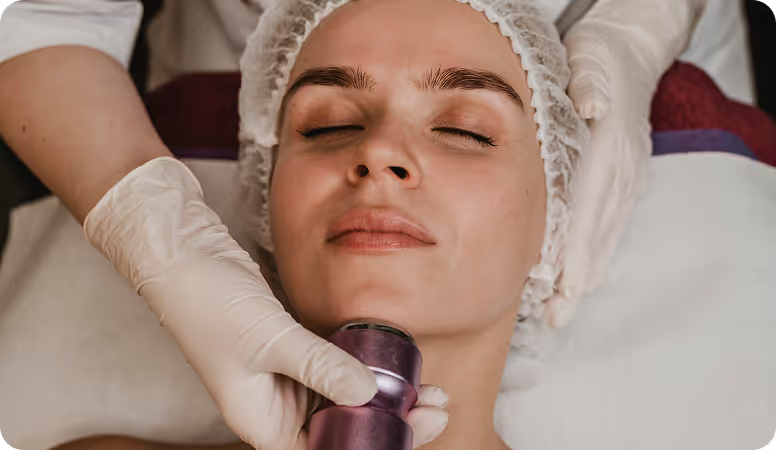
Aesthetic Medicine
We offer personalized aesthetic treatments aimed at natural and harmonious results, adapted to your face and your goals. A complimentary in-person evaluation by medical doctor certified in aesthetic medicine is included with all new consultations as mandated by the Collège des Médecins du Québec (CMQ).
- Neuromodulators: Reduces expression lines, including forehead lines, frown lines, and crow’s feet, for a rested effect while preserving natural expression.
- $11 per unit (when performed by nurse injector)
- $12 per unit (when performed by Physician)
- Dermal fillers: Hyaluronic-acid-based fillers restore volume, redefine contours, and hydrate the skin, including lips, cheeks, folds, temples and jawline.
- Lips: $500 per syringe
- Facial balancing (cheeks, chin, jawline, temples): $550 per syringe
- PRP (platelet-rich plasma): A regenerative technique using your own plasma to improve skin texture, stimulate collagen, and treat hair loss.
- $475 per session
- 10% discount when purchasing 3 sessions upfront
- 15% discount when purchasing 4 sessions upfront
Filler disolving
Hyaluronidase is an enzyme used to dissolve hyaluronic acid-based dermal fillers. Treatment may be recommended to correct an undesired result, asymmetry, overcorrection, filler migration, or certain complications related to previous injections.
An assessment is performed before treatment to determine the most appropriate approach.
- Standard dissolution: starting at $120
- Physician-performed, ultrasound-guided treatment: starting at $180
Ultrasound guidance allows the physician to visualize the tissues and precisely target the area where the filler is located.
.avif)
.avif)
.avif)
.avif)
Skin Lesions
Treatment of skin lesions such as moles, cysts, skin tags, and warts using different approaches, including cryotherapy, excision, and other techniques adapted according to the medical assessment.
.avif)
Book an Aesthetics or Dermatology Consultation
Discuss personalized treatments to support healthy, natural-looking skin.
FAQs
What does physician-directed aesthetic dermatology cover?
What’s the difference between neuromodulators (botulinum toxin) and dermal fillers?
Can botulinum toxin be used to treat excessive sweating (hyperhidrosis)?
How is melasma or hyperpigmentation usually treated?
Are dermal fillers safe, and how can patients reduce the risk of complications?
Get in touch with us


